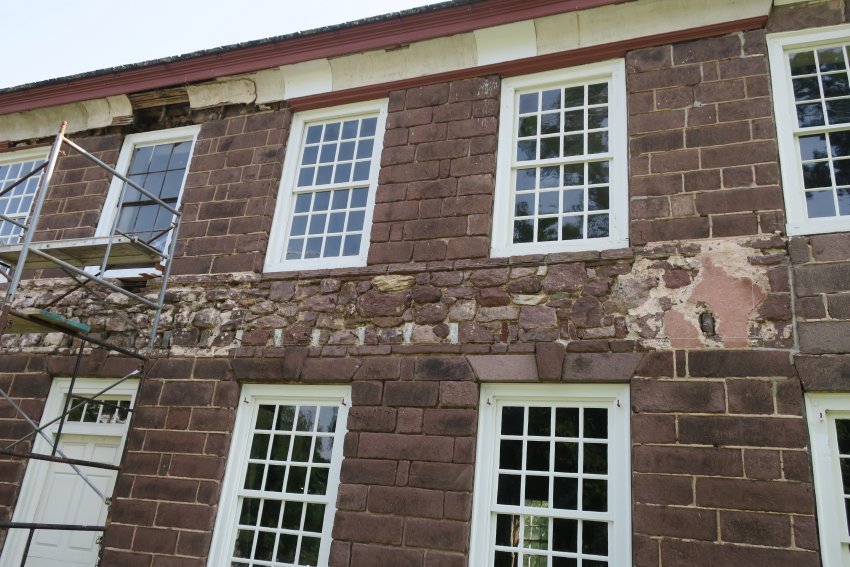
![#2a: Surviving segment of concave [“cove”] plaster cornice](https://ihfmesrtggjwnhkkettk.supabase.co/storage/v1/object/public/archive-public/hptbc/images/006/100801082-2.JPG)
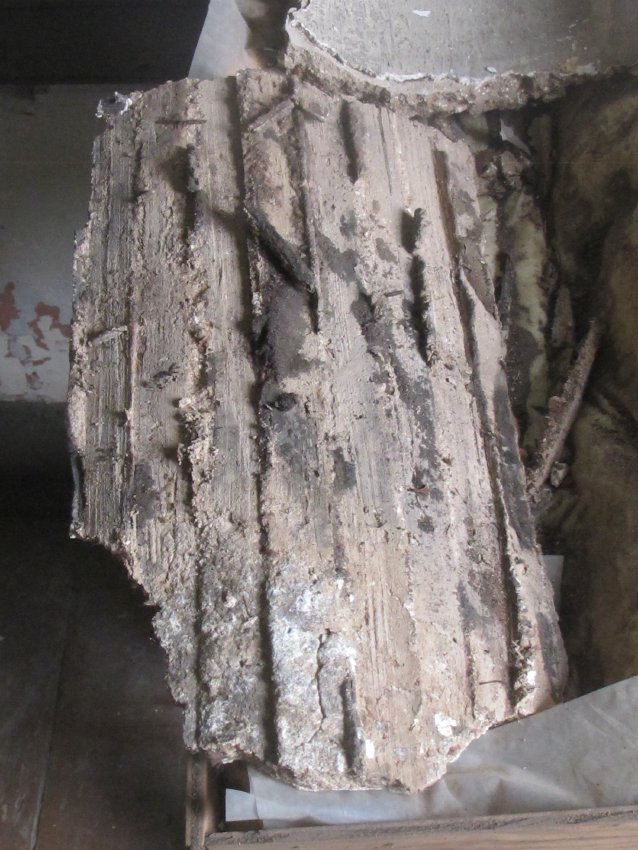
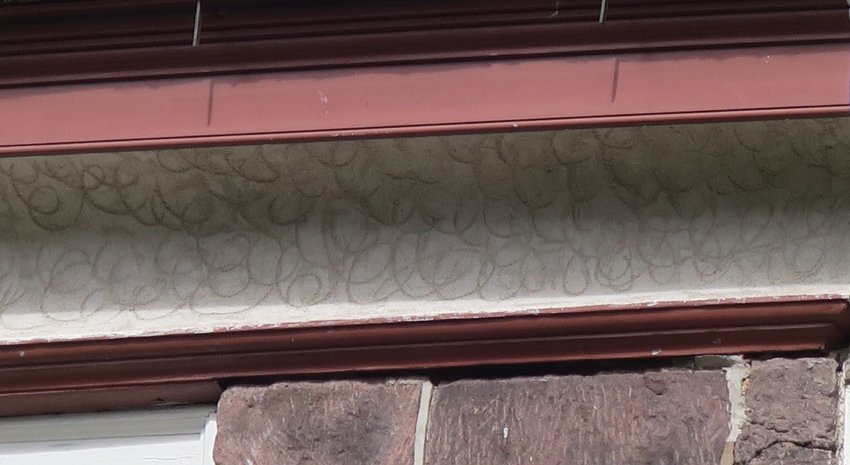
![#5: Early hand-split [“riven”] lath found in 1765 attic](https://ihfmesrtggjwnhkkettk.supabase.co/storage/v1/object/public/archive-public/hptbc/images/006/100801082-6.JPG)
Description
George Douglass House Restoration Accomplishments, July 1 to September 30, 2018
A. Exterior Plaster: Restoring the plastered cove cornice on the primary façade; Image #1, photo 2, 7/21/17, shows a run of the cornice on the primary façade before restoration, with missing and damaged plaster and lath.
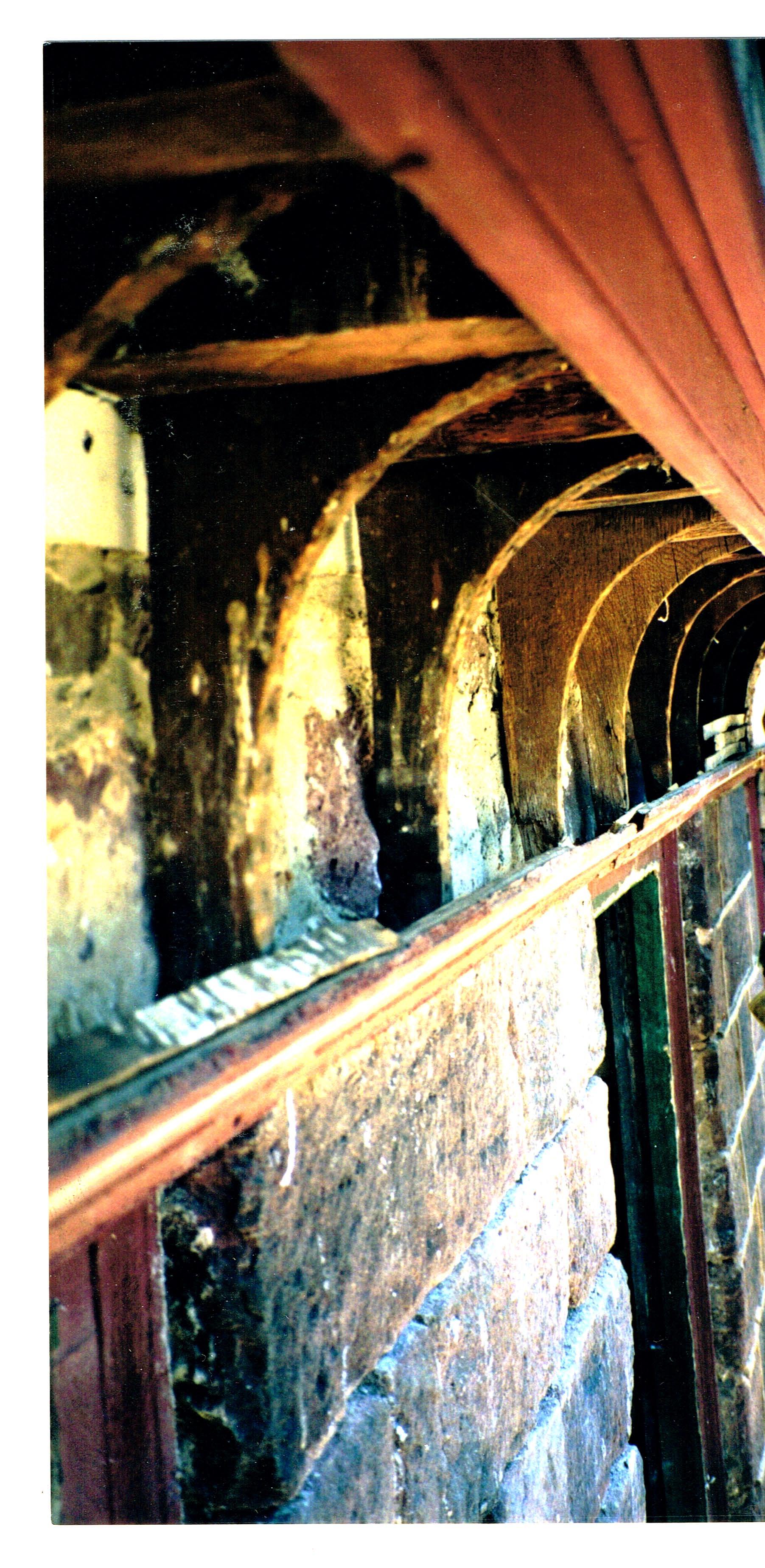
The restoration process required removal of degraded early plaster and later plaster composed of modern cements or other inauthentic materials. The re-plastering technique, based on large fragments of the original lathed and plastered cornice found in the house [Images #2a & b, photos cove plaster and cove plaster keys, 7/12/13], involved application of three coats to the original, repaired, and replacement lath nailed to concave and cantilevered wooden brackets suspended from the ends of attic joists [Image #8, GD Cove brackets, 8/2/13]. The arc-profile lathing provides anchorage for the repaired and replaced lime plaster consolidated to re-create a continuous cornice in the original materials and sectional profile. The plaster layers, a mix of lime, a sand-based aggregate, and water, consisted of:
1. A thin base "scratch" coat extruding through ["keyed"] the gaps between hand-riven ["split"] lath strips [Images 2a & b];
2. A built-up "brown" coat of lime plaster troweled to the varying-radial profile of the radially sawn supporting brackets; the coarse aggregate mixed with lime with a goat-hair binder. After partial curing, this layer was also incised ("scratched") to provide keying for anchorage of the fine and thin finish coat of lime plaster.
3. After curing, the base coats will be covered with a fine-aggregate finish plaster left uncoated unless and until in need of a natural lime wash, or, if the finish coat was originally washed or painted the wash coating will consist of ingredients determined by microscopic analysis performed by Matthew Mosca, Historic Paint Finishes Specialist of Artifex, Ltd. to be the correct first-period surface. Image #3, Photo 5, 9/24/18, shows the cornice on the main façade after application of the base and "scratch" plaster coatings.
B. Interior Plaster: Preparing the interior walls, ceilings, and unstable sections of the hallways and 2d floor chambers for re-lathing and application of the traditional three-coat plaster detailed above for the cove cornice.
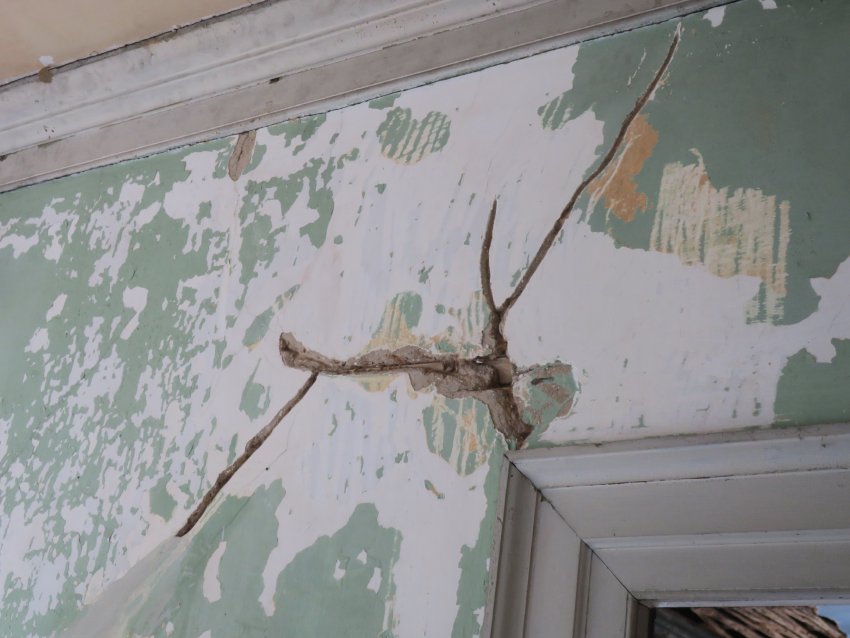
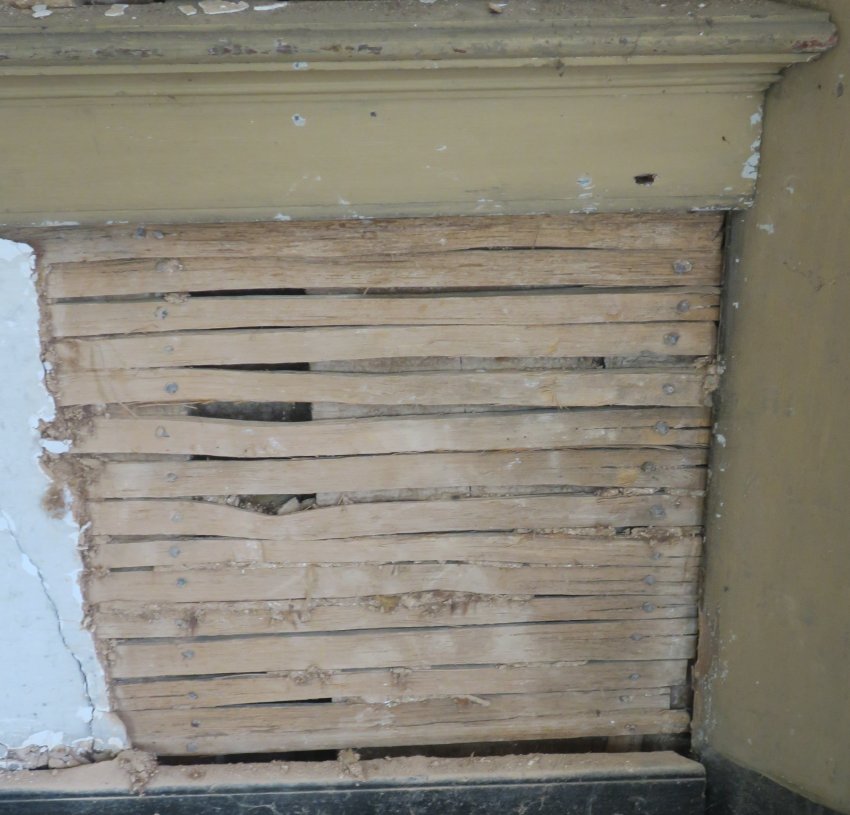
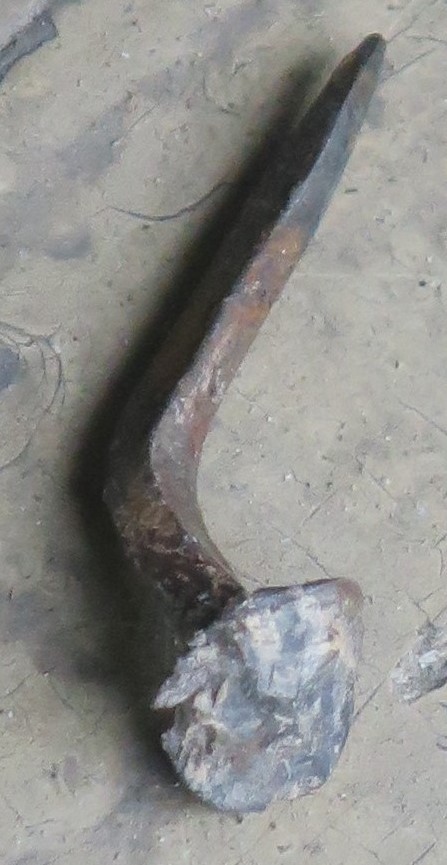
Progress on this phase of the project in the 2d floor hallway and chambers during the past 3 months includes: 1. Raking out cracks [Image #4, photo13, 9/27/18] to the adjacent margins of intact and solidly anchored plaster adequately keyed into undisturbed lath [Image #5, photo # 19, 9/27/18, shows early riven lath found in the 1765 attic which will be used for replacement of broken and detached lath throughout the plaster restoration campaign. 2. Removal of degraded, de-laminated, and late-period plaster from ceilings, wainscot, and wall areas. Image #6, Photo 25, 10/1/18 shows a delaminated section of wainscot plaster below the chair rail in a back-chamber. The loose plaster has been removed and the exposed lath perimeter has been squared, will be framed in lath and covered with Plexiglas to provide an in-situ exhibit of original 1765 hand-riven lath secured by surviving intact wrought nails with hammer-marked heads [Image #7, photo 25, 9/27/18, shows an 18th century wrought and hammered ["rose-head"] nail from early riven lath in the wall]; replacement nails, where necessary, will be fabricated by a specialty vendor with the same essential material and wrought-form as the originals. The early nails display light surface oxidation from the moisture in the plaster as it cured, but minimal corrosion or compromised integrity after 253 years of service.
C. Interior Carpentry and Joinery: will include: (a) Repair, gauging to thickness, leveling, and restoration of tongue-and-groove flooring in western segment of NW ["best"] parlor; and
(b) Preparation and commencement of millwork for chimney-piece paneling and wainscot ["dado"] in the NW parlor.
Laurence Ward, December, 2020
Catalog details
- Catalog number
- 1008.01.082
- Alternate number
- HPTSSR37
- Accession number
- 1008.01
- Date
- September 30, 2018
- Object name
- Report
- Record type
- Archive
- Classification
- Documentary Artifact