Description
MJH-Leaded Glass Window Considerations:
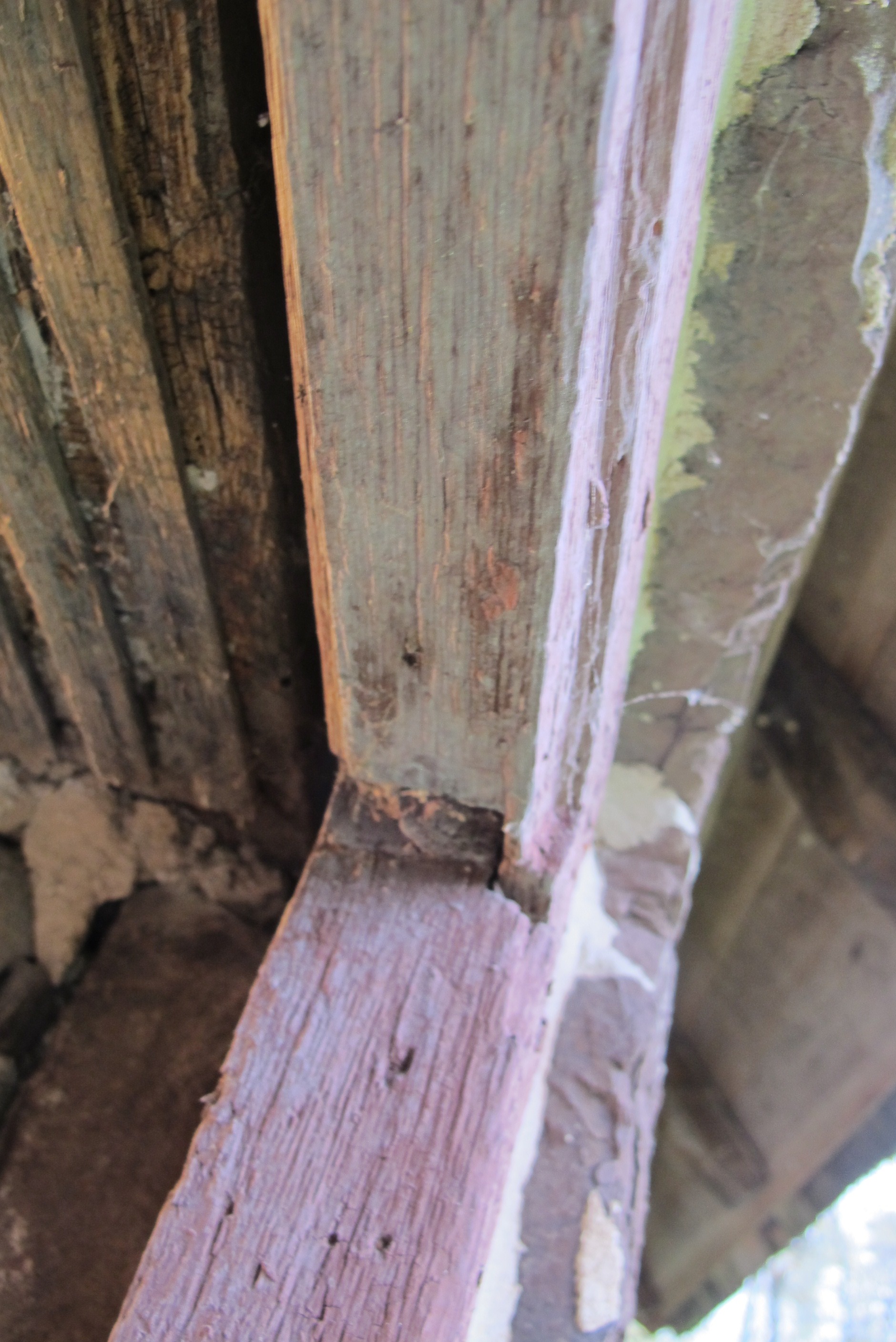
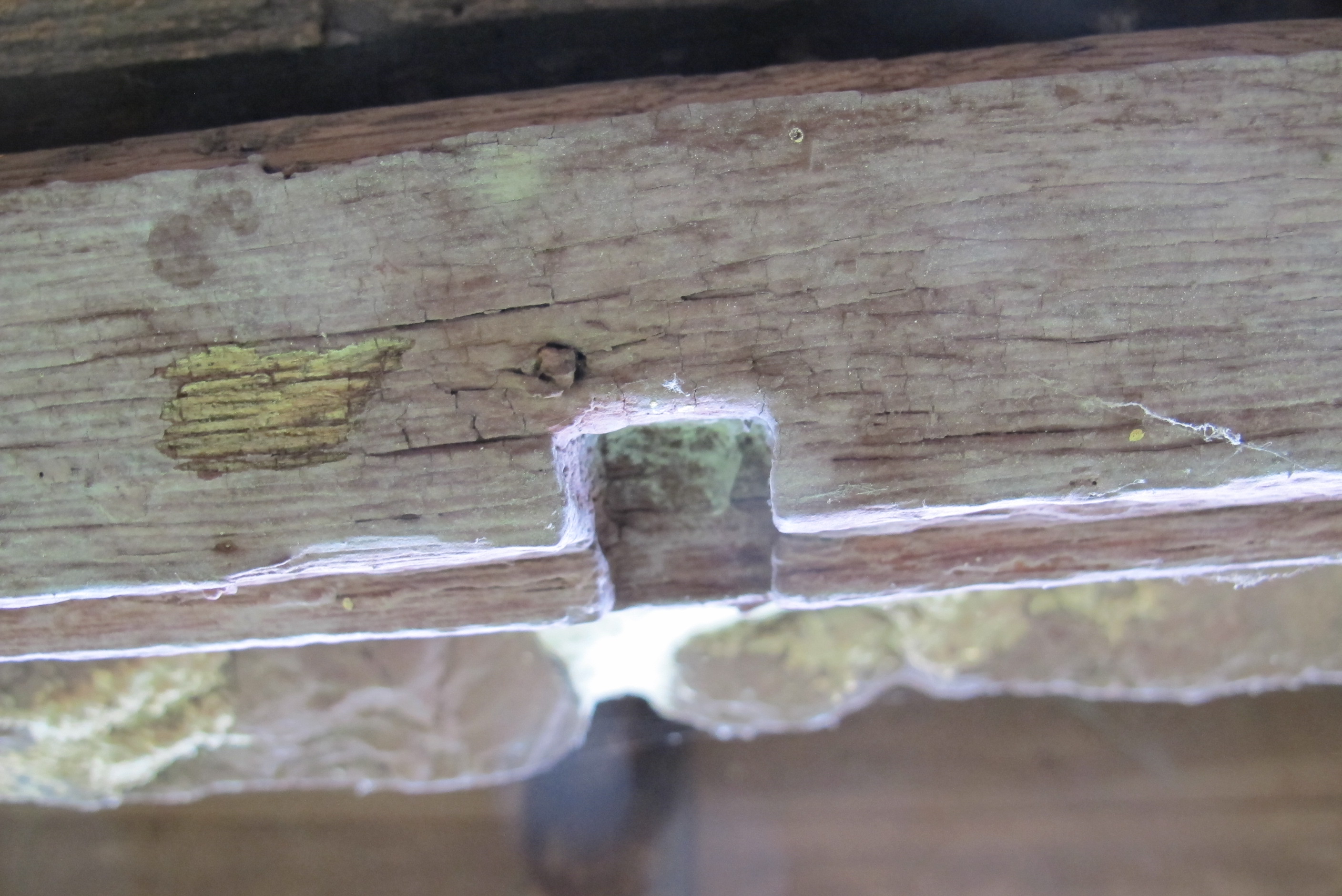
The shallow [less than ½”] rabbet across the head of the early window frame in the 2d story opening in the northern bay of the eastern eaves wall indicates that the original frame would not have provided seating deep enough for wooden sash, which are typically 1” thick or greater [see Images ##1 &2, photos 1943 & 1944, 11/6/14]. The stiles of this frame have been cut back, removing the vertical rabbets, so the head fragment is the only plausible evidence of leaded glazing in this opening. To date, no fragments of lead or iron have been found in the archaeological activities conducted on the site by Chapter 21, PSA. However, sherds of thin, flat glass with a translucent green cast and some straight edges have been found in the excavations along both eaves walls. This type of glass is consistent with glass used in the late 17th and early 18th century in leaded glass windows in British homelands and colonies. The presumed rarity of leaded glass windows in early Philadelphia is noted in footnote (c) in record MJHPH1 in these aqrchives.
The tangible evidence presents three possible alternatives for leaded lights in the 1716 house:
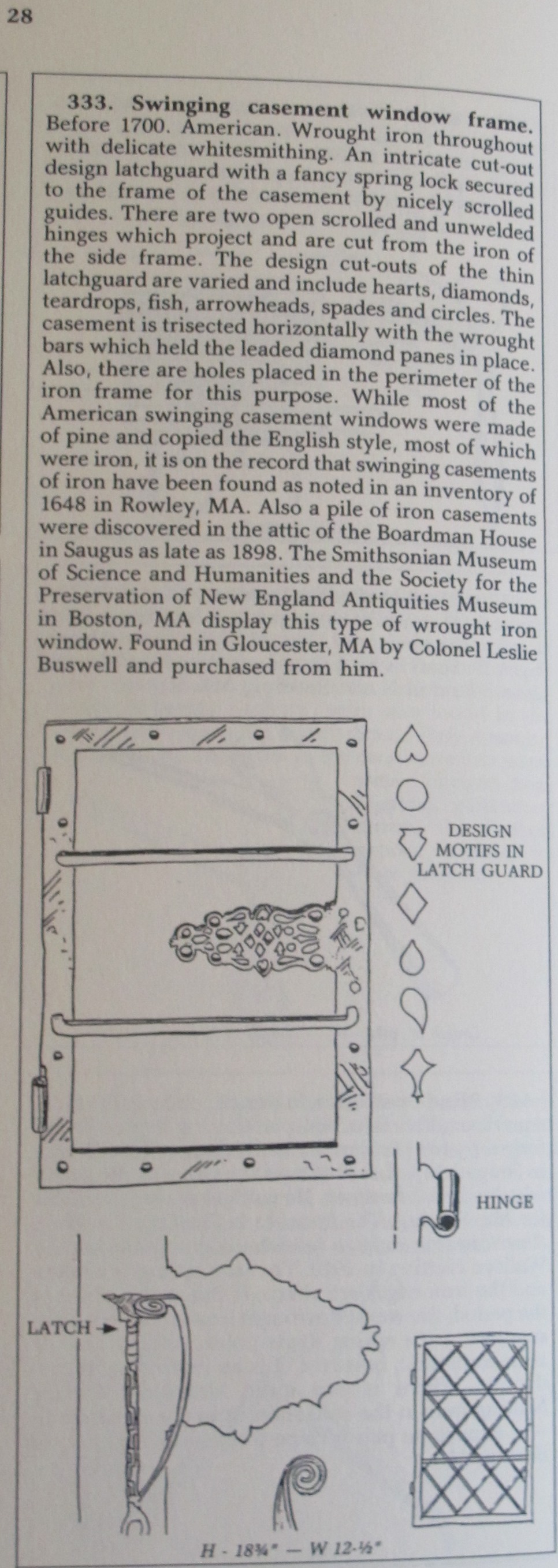
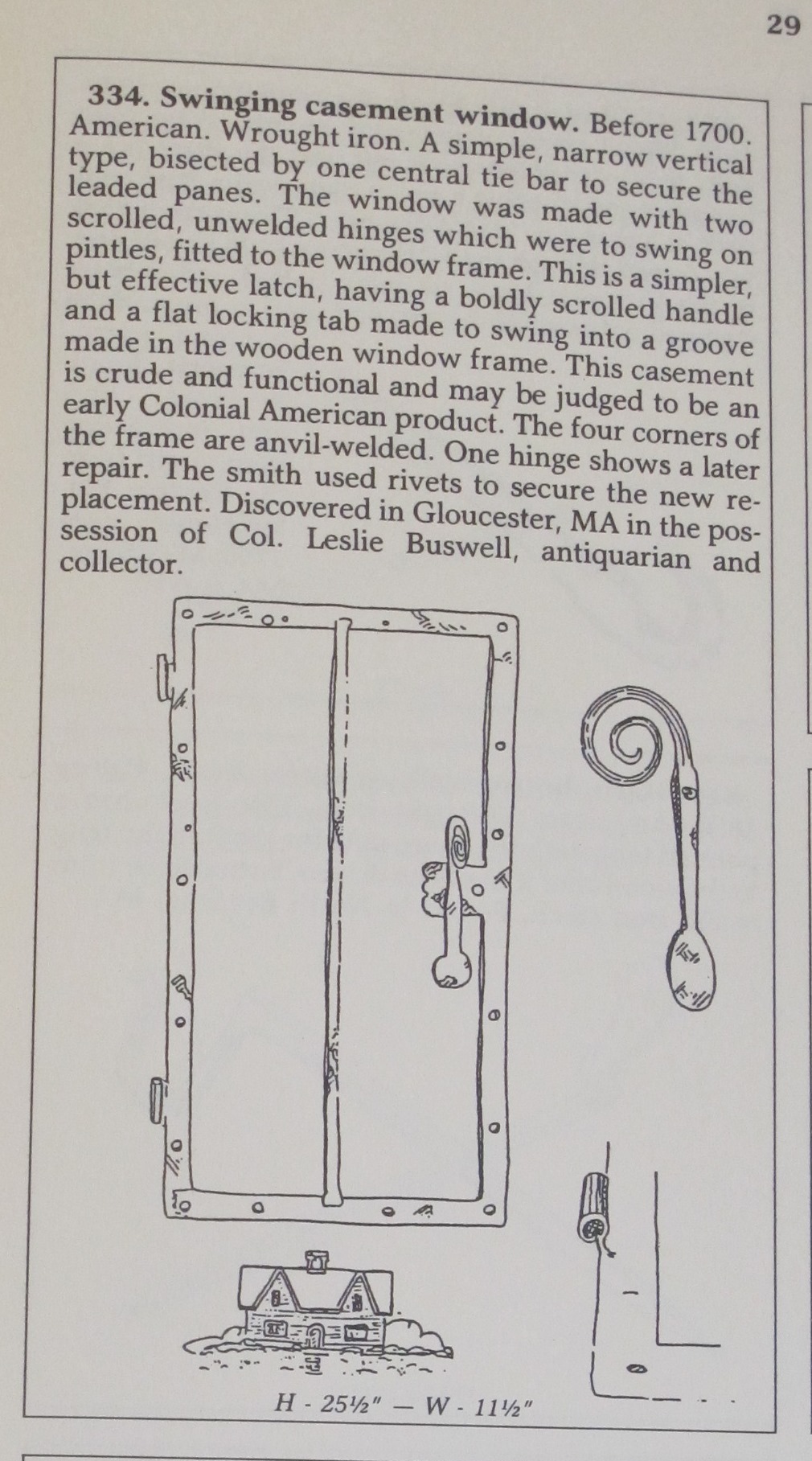
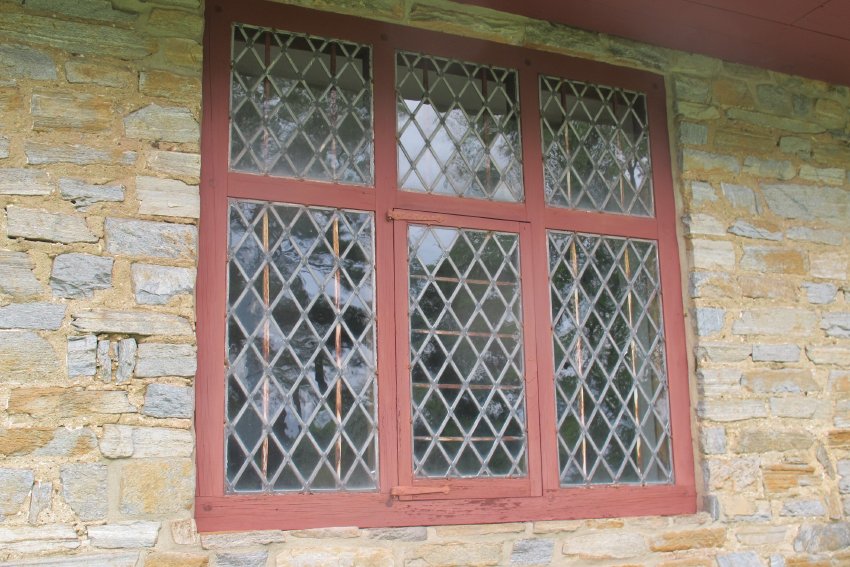
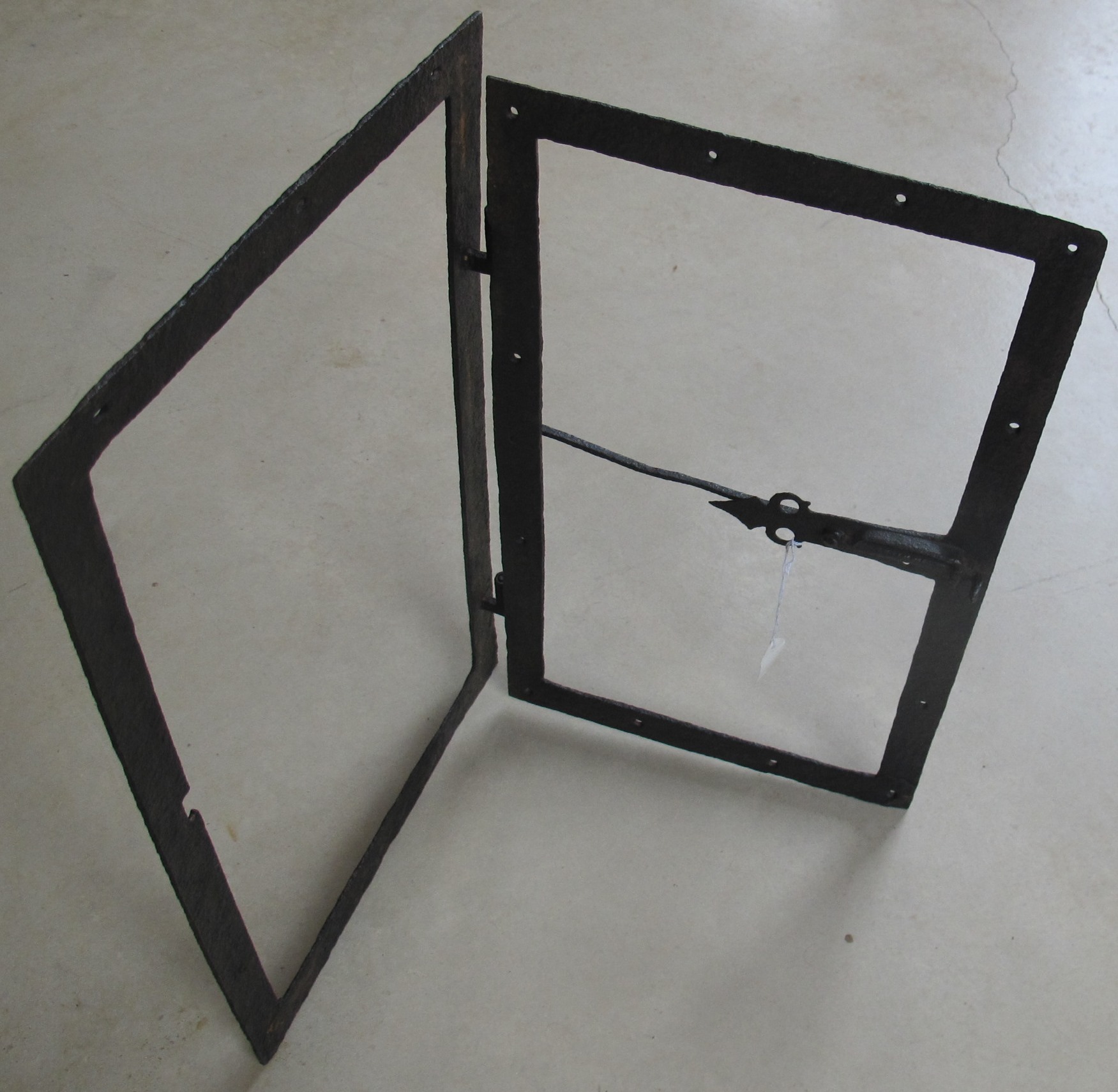
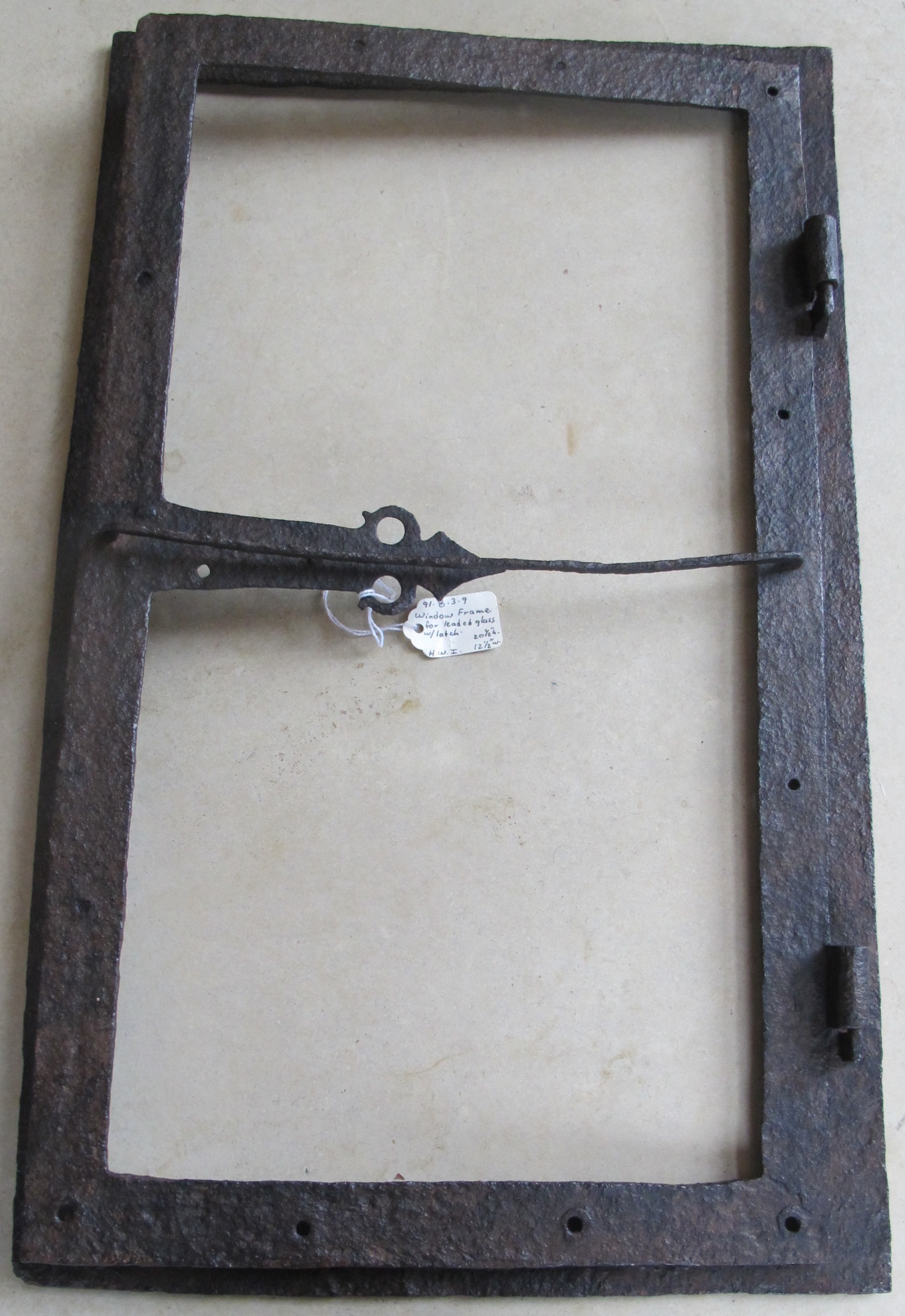
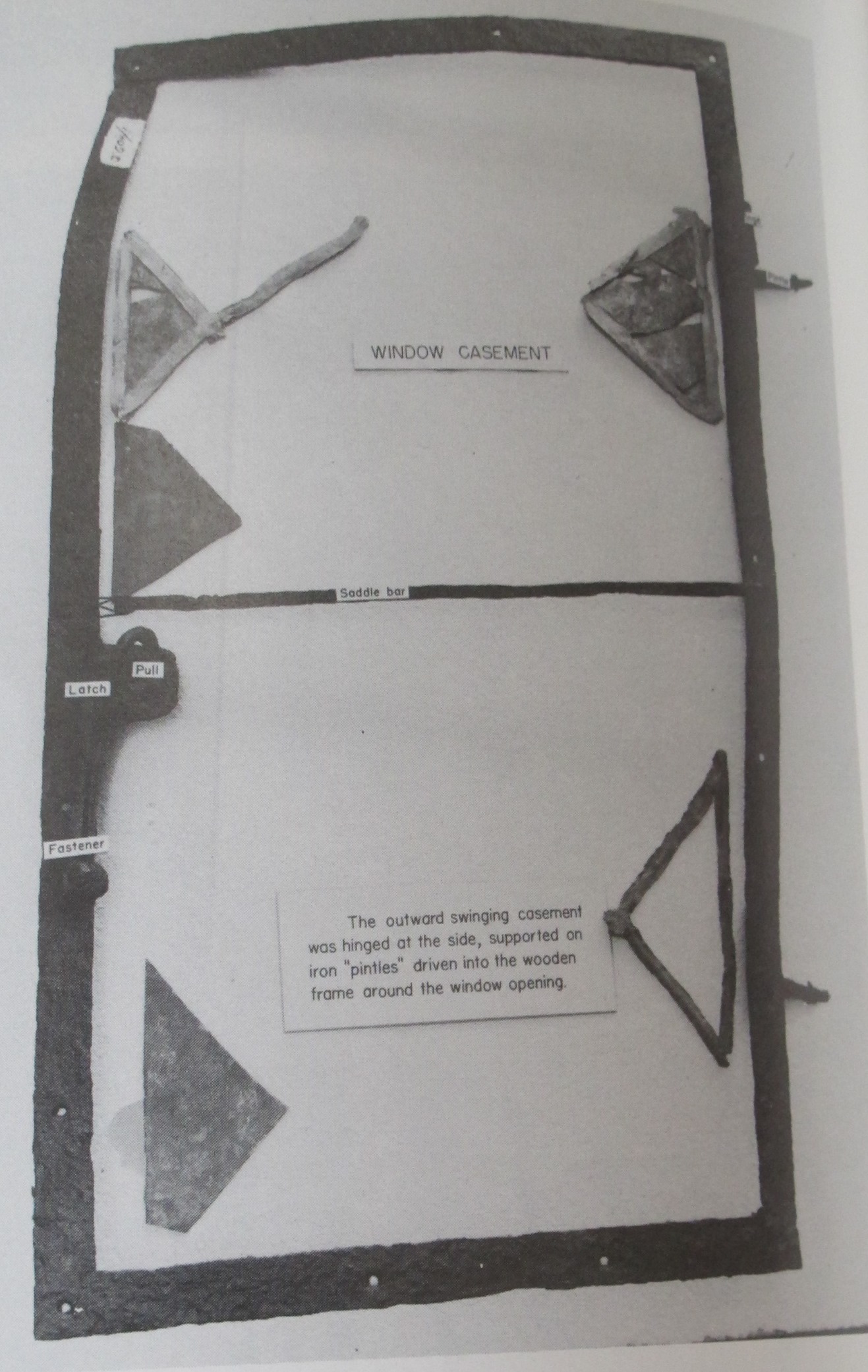
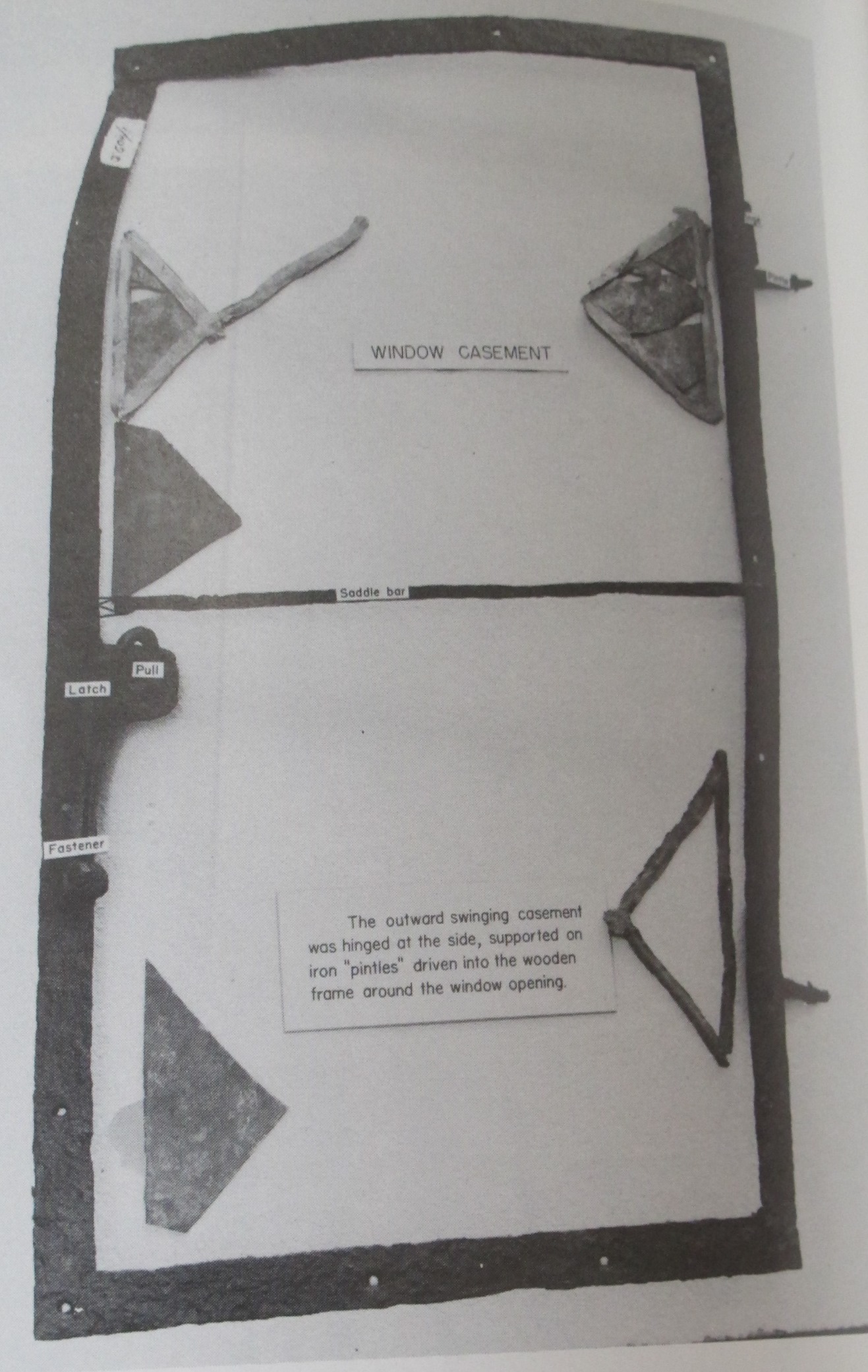
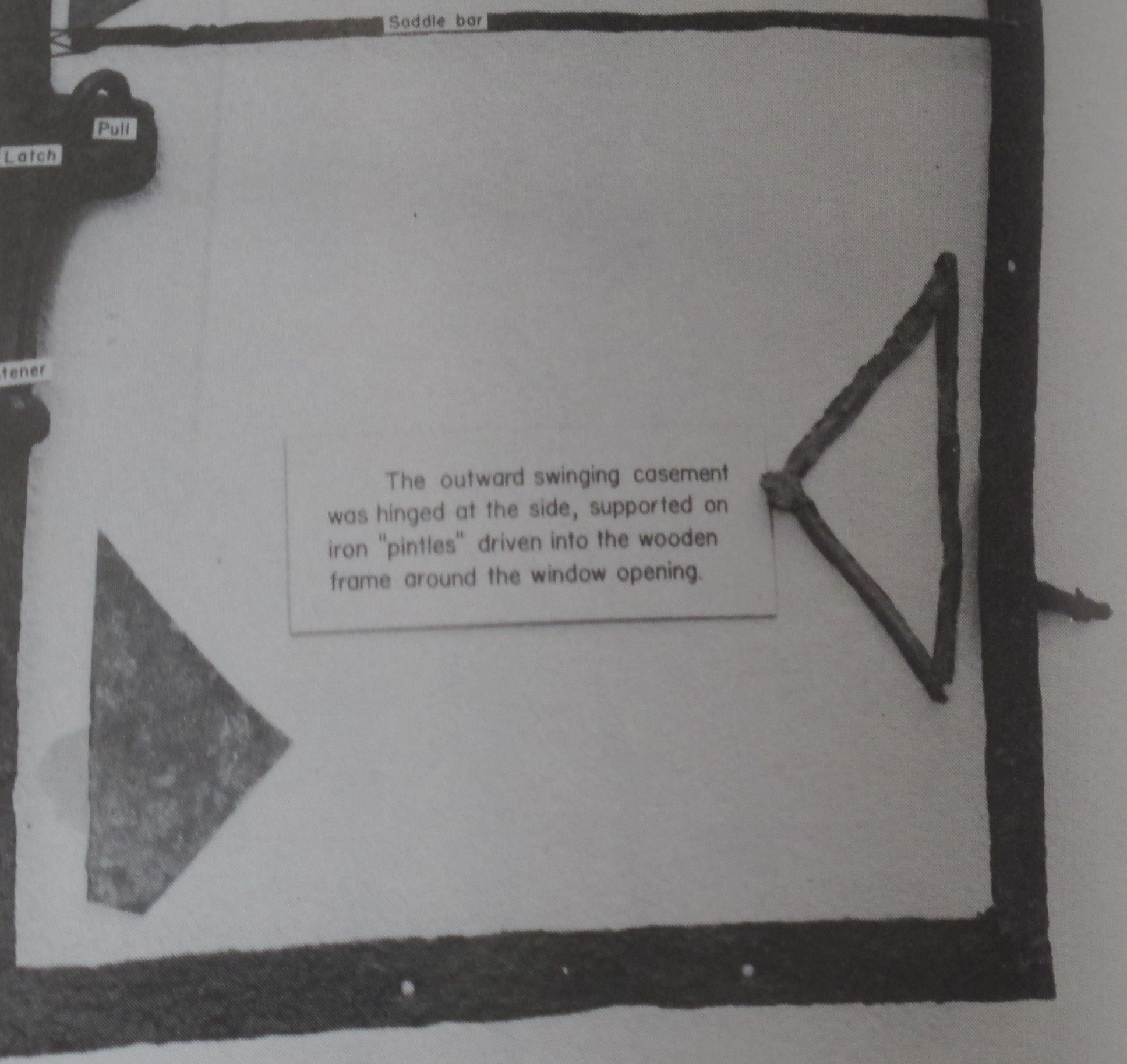
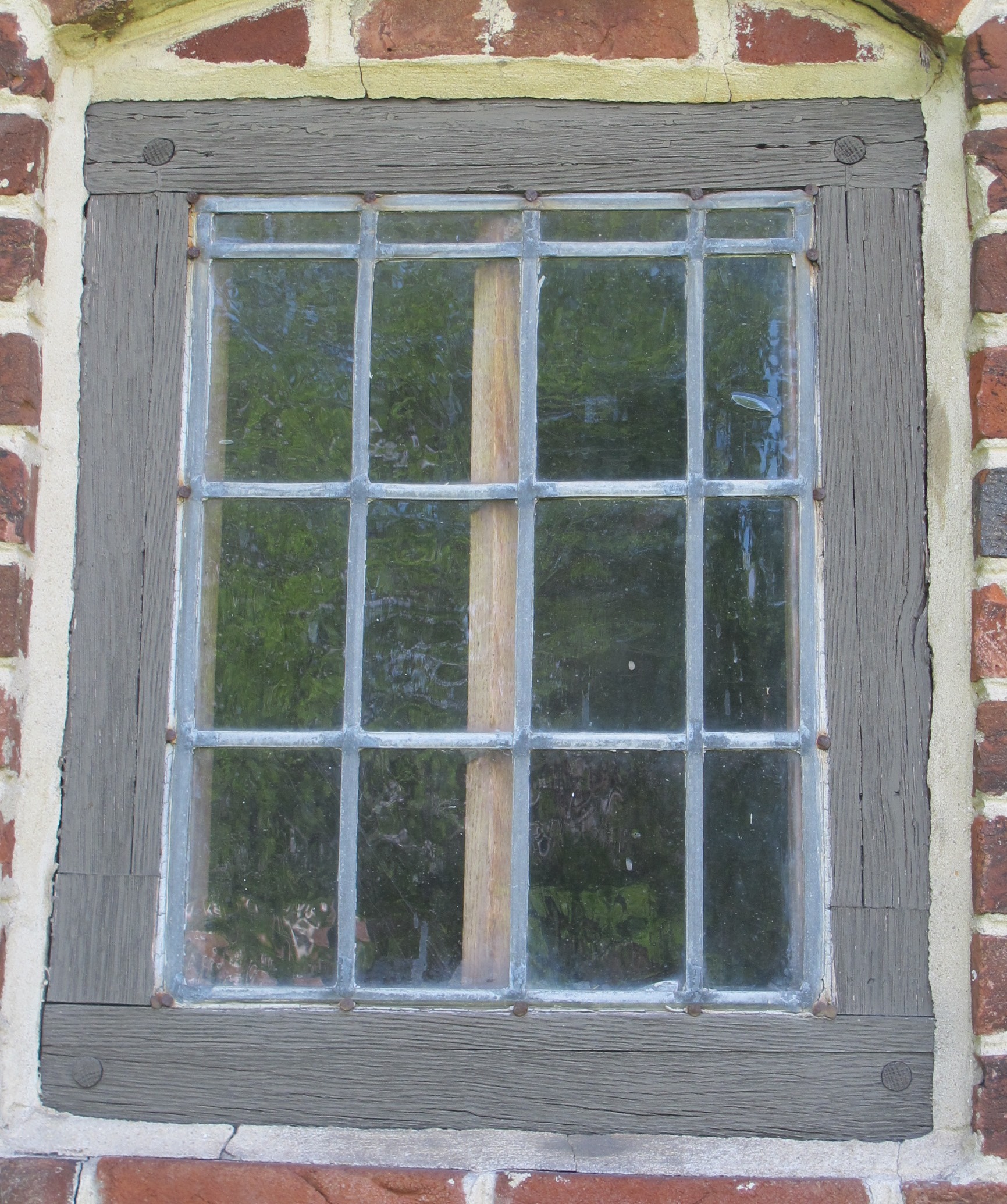
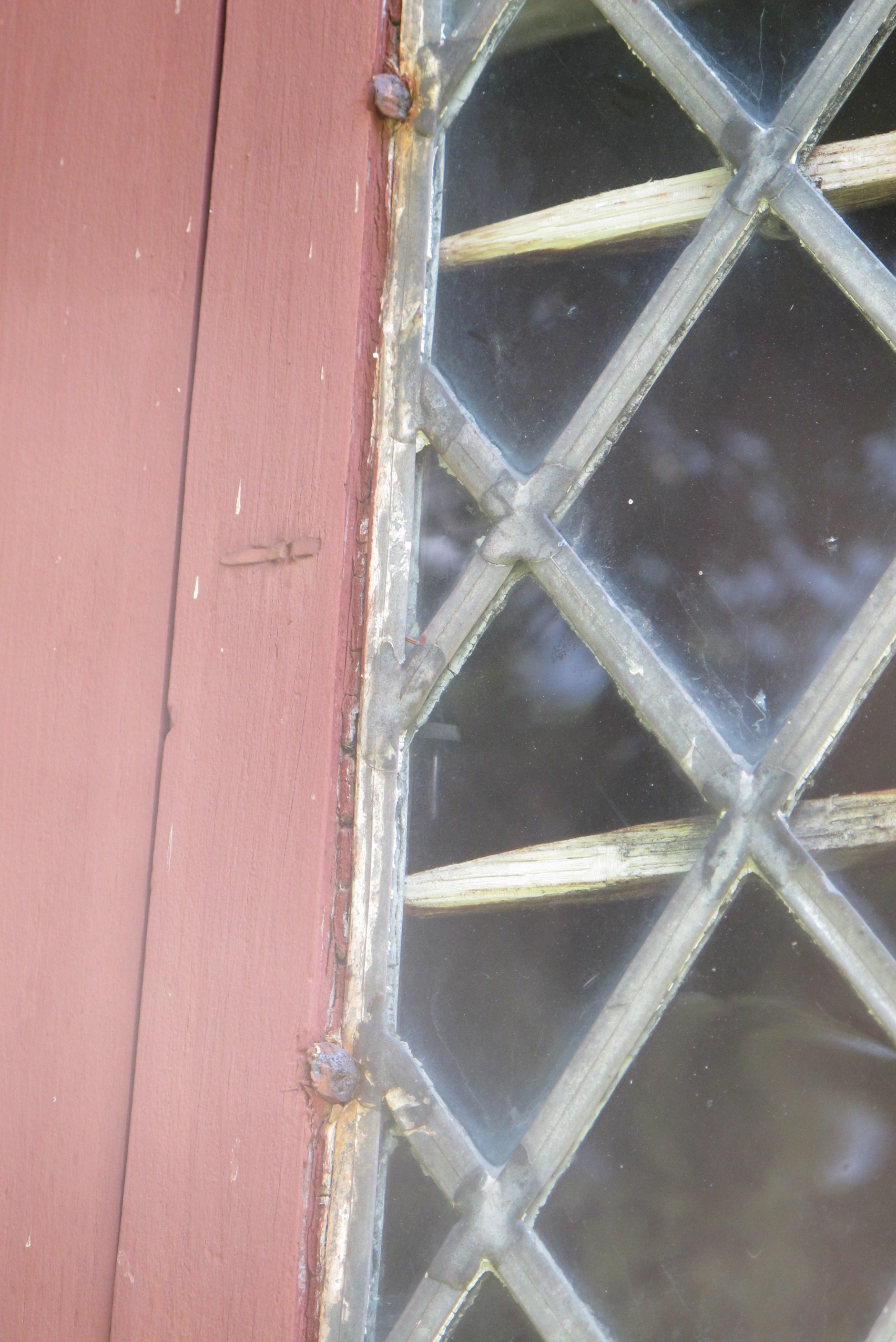
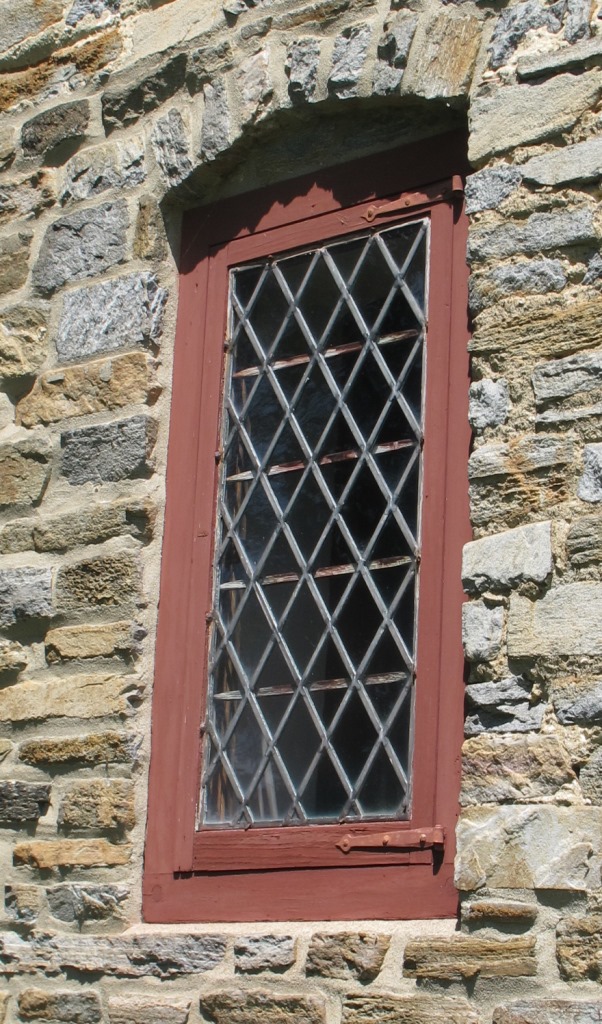
A. Fixed leaded lights with a perimeter consisting of “turned lead” came [Lounsbury, Glossary, p. 63] nailed directly into the rabbet of the wooden frame secured into the masonry or board-sheathed wall. Examples of this type appear in the 1714 Barns-Brinton House in Chadds Ford, PA [Image #3, photo #4959, 5/15/15], in the Thomas Massey house, and in numerous other well-documented houses in the Anglo-American colonies. B. If ventilation is assumed as a standard function of 2d story windows in the Mouns Jones House, another alternative readily available in the Atlantic seaboard colonies in the early decades of the 18th century, was the casement type, framed in wood or iron, pivoting on hooks [later “pintles”] driven into the wooden fixed frame [Images #4, 5, 6]. C. A third possibility is a type-B iron casement frame hinged and pivoting on hooks on a fixed iron frame nailed to the wooden structural frame secured into the masonry or timber jambs delineating and structurally stabilizing the window opening. Image #7 & 8, Photos 2667 & 2670, 10/28/15, showing an intact specimen of this form from a private collection.
Additional images:
5/21/16, #133, fixed wooden frame at William Brinton 1704 house, PA, Type A.
7/11/15, #6094, William Brinton House, operating window in wooden casement frame; #6046, detail showing perimeter came tacked directly into the wooden structural frame. Type B [Wood].
5/25/16: photos 3 & 4, type B, from a Gloucester, MA collection.
10/28/15, #2684, 2687, Jamestown, VA., Type B [Iron].
Another example is the “King” Carter House, Lancaster County, VA [Type B, Iron]; Lounsbury, Glossary, p. 63 [photo].
Until evidence more fully documenting the early existence and form of a leaded window in the Mouns Jones House, the suggestion is to fabricate an example of Type B or C and exhibit and interpret it within the house, with the possibility of installing it in the opening as a plausible hypothesis of the early form.
Laurence Ward, June 2016
Catalog details
- Catalog number
- 1000.01.125
- Alternate number
- MJHPH102
- Accession number
- 1000.01
- Object name
- Picture
- Record type
- Standard
- Classification
- Art