Description
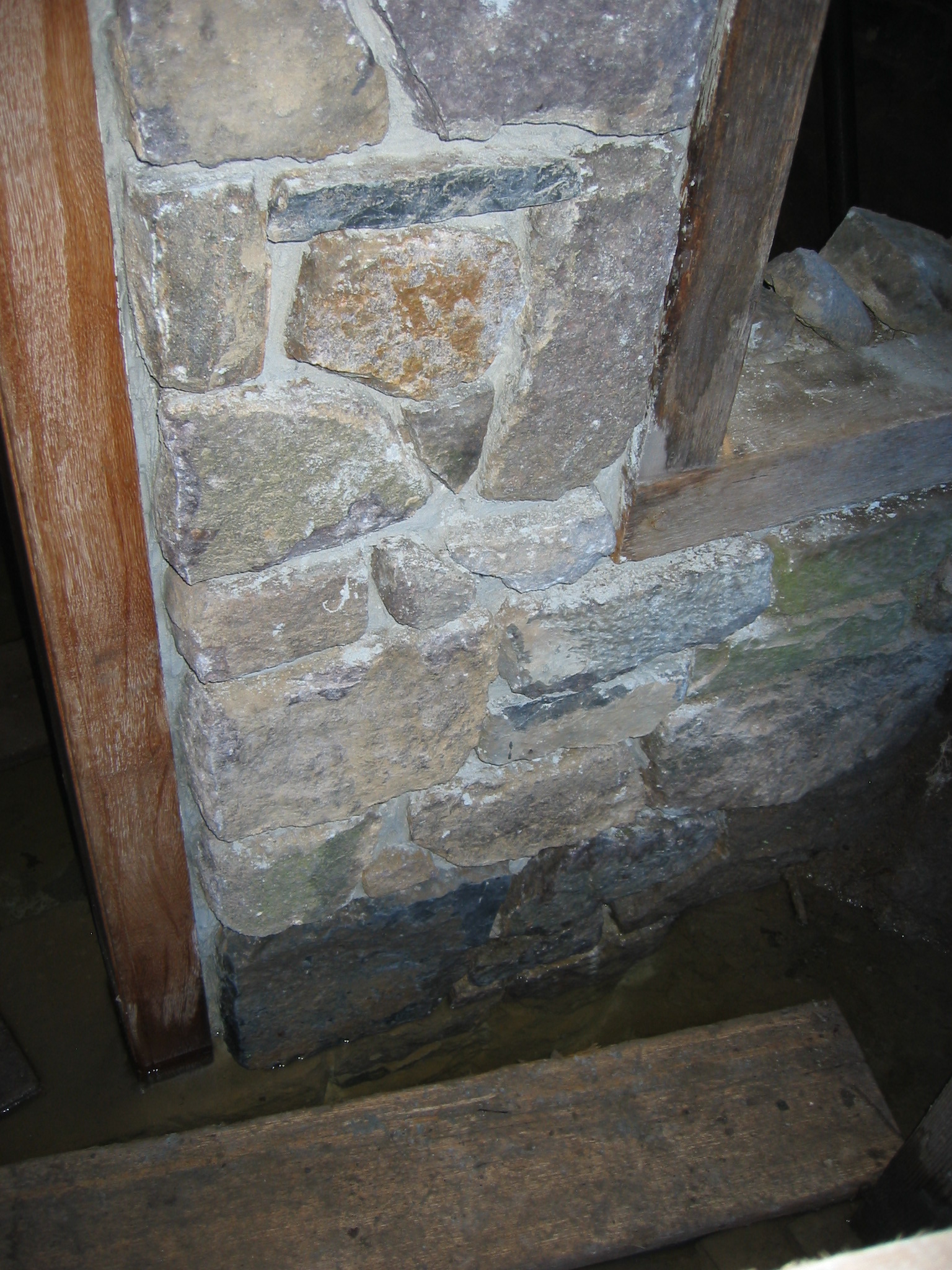
Digitial photograph of realigned and reconstructed masonry pier abutting the north jamb at the DeTurk kitchen doorway. The joints were repointed in the traditional convex double-struck “V” method{1}, using sand from the adjacent Little Manatawny Creek, mason’s lime, and a small percentage of Portland cement. A higher proportion [about 20%] of Portland cement{2} was used below finished grade, from the base blocks situated on bedrock to a level about 20 inches above the door sill, to inhibit the effects of saturation of the joint mortar from ground water and surface runoff. The water table, supplemented by storm runoff, has percolated through the foundation walls for decades, dissolving some of the lime content of the mortar and converting much of it into a sandy-mud, incapable of providing the necessary bonding and bearing function in “rubble’ walls subjected to a persistently high moisture incursion.
FOOTNOTE
{1} Also called “crown” and “potato” pointing.
{2}: Except in rare circumstances such as these, Portland cement is not an acceptable additive to lime mortar in restoration of historic structures. Its degrading qualities include blocking the beneficial migration of moisture through the masonry, trapping it and dissolving lime.
L. Ward, 2009, updated Oct 2021
Catalog details
- Catalog number
- 1001.01.138
- Alternate number
- DTR09PH54
- Accession number
- 1001.01
- Date
- 08/10/2009
- Creator
- Larry Ward
- Object name
- Print, Photographic
- Record type
- Standard
- Classification
- Documentary Artifact